Understanding Foundation Plumbing Leaks in Santa Fe Residences
A slab leak occurs when a pressurized potable water supply line routed beneath or cast inside the poured concrete foundation develops a rupture, crack, or pinhole failure. In Santa Fe, New Mexico, where single-family architecture features a rich blend of historic adobe-style residences, territorial revivals, and modern stucco-clad ranch homes on concrete slabs, domestic supply plumbing was traditionally positioned in bedding sand or gravel prior to pouring the slab. Over decades of high-desert service, constant hydraulic pressure, mineral-rich water, and thermal movement impose substantial stress on sub-slab copper and galvanized networks.
When an active leak under foundation Santa Fe properties develops, water rarely remains isolated at the exact pipe failure point. Instead, pressurized water migrates along perimeter footings, washes away compacted sub-base soil, saturates saltillo tile or hardwood flooring, and creates hollow pockets beneath load-bearing walls. Identifying and addressing a water leak under slab Santa Fe residence demands prompt diagnostic assessment before structural movement or widespread cosmetic deterioration occurs.
Why Slab Leaks Develop in Santa Fe Homes
Santa Fe sits at an elevation of 7,000 feet at the base of the Sangre de Cristo Mountains, creating a distinct high-desert environment that accelerates underground pipe wear. Multiple regional factors explain why homeowners require specialized under slab leak repair Santa Fe services:
- Hard Water Corrosion: Municipal supplies and private wells across Santa Fe County draw water rich in dissolved minerals, including calcium carbonates and sulfates. Over time, internal mineral scaling combines with water chemistry variations to initiate aggressive electrolytic corrosion, producing pitting in copper pipes beneath slabs.
- Sub-Freezing Winter Temperatures: Santa Fe winters bring sustained freezing temperatures. Even though foundation mass provides insulation, water lines passing near exterior stem walls or uninsulated perimeter footings experience thermal contraction and stress that can cause joint solder failures or split metal tubing.
- Abrasive Caliche and Sandy Soils: Santa Fe soil profiles frequently feature dense caliche formations interspersed with coarse sand and river rock. As pressurized copper tubing expands and contracts during normal hot and cold water usage, it rubs against rough caliche rocks until friction wears through the copper pipe wall.
- Vibration and Mechanical Wear: Unsecured supply pipes embedded directly in concrete without protective sleeving experience continuous micro-vibrations from water hammer and velocity surges, fatiguing the copper over years of operation.
Warning Signs Checklist: When to Suspect a Slab Leak
Because pressurized plumbing lines run entirely beneath poured slabs, visual indicators often appear elsewhere in the living space. Homeowners in Santa Fe should monitor for these distinct warning signs:
- Isolated Warm Spots on Flooring: Walking barefoot across saltillo tile, stone, engineered wood, or carpet and encountering an unexpected warm patch is a primary symptom of an active hot-water slab failure.
- Sound of Running Water Without Active Use: Hearing a steady hissing, humming, or rushing water sound inside walls or through the floor when all faucets, toilets, and appliances are shut off.
- Water Meter Continuous Movement: If the low-flow indicator dial or digital display on your Santa Fe water meter continues spinning while all internal valves are closed, pressurized water is escaping somewhere in the line.
- Spike in Monthly Water or Heating Bills: An unexplained surge on your City of Santa Fe water utility bill or an unexpected increase in natural gas or electric consumption from a constantly firing water heater.
- Damp Flooring, Saltillo Tile Discoloration, or Moisture: Darkening grout lines, damp carpet pads, or efflorescence (powdery white mineral deposits) surfacing on masonry floors.
- Baseboard Swelling and Mildew Odors: Musty odors emanating from baseboards, drywall discoloration near floor joints, or peeling paint near interior walls.
- Hairline Foundation or Stucco Cracks: Shifts in foundation soil saturation can trigger settling, manifesting as hairline fissures along interior drywall or exterior stucco surfaces.
Immediate Steps: What to Do While Arranging Diagnostics
Taking prompt precautions minimizes collateral damage to finishes and framing while you arrange for a professional slab leak plumber Santa Fe inspection:
- Locate and Turn Off the Main Water Shutoff: The primary shutoff valve is typically located near your front hose bib, in a basement or utility closet, or inside the exterior ground meter box. Closing this valve stops active water loss immediately.
- Shut Down Your Water Heater: If the leak involves a hot water line, turn the water heater gas control knob to "Pilot" (or switch off the dedicated electric breaker) and shut the cold supply valve feeding the tank to stop overheating the burner.
- Photograph All Visible Moisture and Flooring Changes: Take detailed, well-lit photos of damp flooring, stained baseboards, and the current water meter reading. These records are essential for insurance documentation.
- Clear Moisture from Finished Floors: Towel dry wet tile or remove saturated rugs to protect surrounding adobe plaster, wood baseboards, and furniture from water absorption.
- Call for Professional Diagnostic Dispatch: Contact our team at (888) 205-7875 to schedule an exact acoustic and thermal leak detection evaluation.
How Santa Fe Slab Leak Detection and Repair Works Step by Step
Resolving an underground line breach requires an orderly, systematic diagnostic workflow to ensure accurate pinpointing before executing permanent repairs:
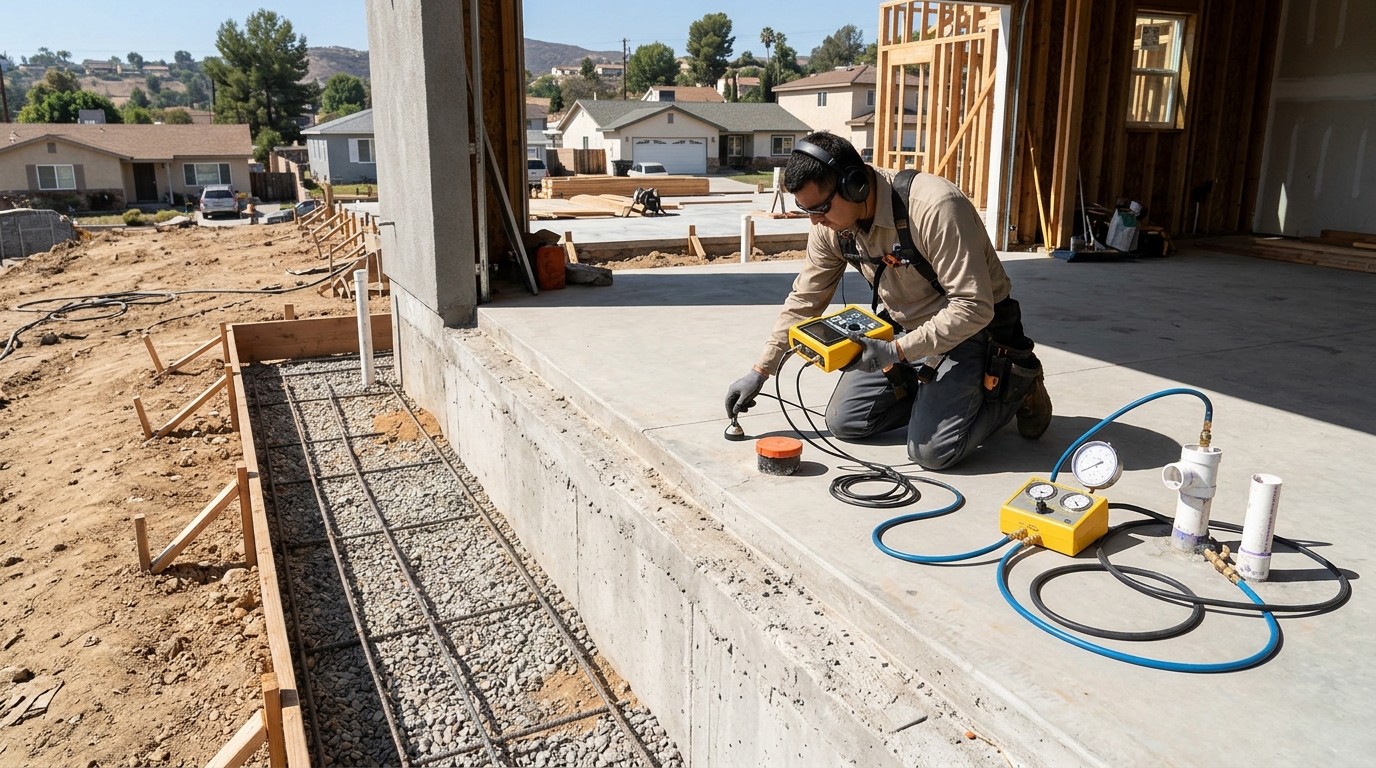
- Step 1: Mechanical Pressure Testing: Gauges are connected to the plumbing manifold to verify whether pressure decay is isolated to the cold potable system or the hot water supply circuit.
- Step 2: Non-Invasive Acoustic and Electronic Pinpointing: Specialized electro-acoustic sensors and ground microphones capture the distinct high-frequency sound of pressurized water escaping through copper fissures.
- Step 3: High-Resolution Thermal Imaging: Infrared cameras track heat migration patterns radiating upward through concrete and tile flooring, identifying the thermal core of hot water leaks.
- Step 4: Electromagnetic Pipe Location: Line transmitters trace the exact underground path and depth of the failing pipe beneath the concrete footprint.
- Step 5: Tailored Repair Strategy Formulation: Once the exact rupture coordinates are verified, the technician presents the most viable, cost-effective restoration plan—whether a localized direct repair, an overhead line reroute, or comprehensive repiping.
Repair Options and What Influences Repair Costs
Homeowners frequently inquire about slab leak repair cost Santa Fe factors. Because foundation layouts, flooring materials, and piping conditions differ significantly across Santa Fe neighborhoods, overall project scope depends on several core variables:
- Direct Spot Repair Through the Slab: Suitable when copper lines are generally sound and the breach is accessible in an area where localized concrete opening will not compromise structural elements or historic decorative tile. A technician makes a small, controlled concrete opening, repairs the damaged section with new copper or approved mechanical fittings, pressure tests the assembly, and backfills the opening.
- Overhead Line Reroute: Often the preferred approach in Santa Fe homes with delicate saltillo tile, custom flagstone, or thick adobe walls. Rather than jackhammering finished floors, the compromised line is abandoned under the slab, and a new PEX supply line is routed through interior wall framing or overhead attic space.
- Whole-House Repiping: When an older home exhibits recurring pinhole failures, multiple corroded joints, or deteriorating legacy polybutylene lines, replacing the entire water distribution system above the foundation provides complete long-term protection.
Key cost factors include the depth and accessibility of the line, the type of finished flooring above the leak, whether attic or ceiling access allows overhead routing, and the need for permit compliance and drywall restoration.
Specialized Foundation Plumbing Services
Depending on diagnostic findings, your property may benefit from our full range of specialized plumbing diagnostic and restoration capabilities:
Slab Leak Detection
Non-invasive electronic acoustic testing, pressure loss isolation, and infrared thermal imaging to locate foundation pipe breaches without speculative concrete demolition.
Learn About DetectionHot Water Slab Leak Repair
Resolving rapid-failing hot supply lines that cause floor hot spots, continuous water heater operation, and high utility bills in Santa Fe residences.
Explore Hot Water SolutionsSlab Leak Reroute
Bypassing leaking under-slab lines by running durable PEX piping through interior wall cavities or ceilings, keeping your saltillo or hardwood floors intact.
Explore Reroute BenefitsWhole-House Repiping
Comprehensive potable water system replacement using modern PEX or copper for properties experiencing repeated slab failures or aging pipe networks.
Learn About RepipingWater Leak Detection
Locating hidden plumbing leaks behind adobe plaster, inside bathroom walls, under fixtures, and across exterior main yard service lines.
Discover Leak DetectionPinhole Leak Repair
Diagnosing and correcting chemical and hard water pitting in residential copper supply lines before widespread moisture damage occurs.
Review Pinhole RepairsSlab Leak Insurance Help
Detailed technical documentation, diagnostic reports, and moisture assessments to assist with your homeowner insurance claims process.
View Insurance GuidelinesAreas Served Throughout Santa Fe and Surrounding Environs
Our service network supports homeowners across central Santa Fe including residential properties near the historic slab leak repair near Eastside district, arts residences with custom tile in the slab leak repair near Canyon Road area, historic brick and adobe homes in the slab leak repair near South Capitol corridor, and contemporary master-planned residences throughout Rancho Viejo. We coordinate comprehensive diagnostics tailored to high-desert construction styles.
For detailed neighborhood descriptions and regional response coverage, visit our Santa Fe service areas overview.
Frequently Asked Questions About Santa Fe Slab Leaks
How long does an electronic slab leak detection appointment take?
Most residential detection evaluations take between 1.5 to 3 hours. The technician systematically checks water meter movement, isolates hot and cold lines under pressure, and utilizes acoustic listening tools and infrared thermal imaging to identify the precise failure location.
Is jackhammering always necessary to fix a foundation leak in Santa Fe?
No. In fact, many Santa Fe homeowners choose an overhead pipe reroute rather than breaking concrete. Rerouting avoids disturbing finished flagstone, brick, or saltillo tile floors by running a new, insulated PEX water line through interior walls or attic spaces.
Will homeowner insurance cover under-slab plumbing leaks?
While insurance policies vary, many standard policies distinguish between the cost of accessing the damaged line (tearing out and patching flooring/concrete) and repairing the pipe itself. Resulting moisture damage to interior furnishings and flooring is frequently covered. Review our slab leak insurance guide for detailed documentation tips.
Why do hot water lines develop leaks under the slab more frequently than cold lines?
Hot water lines endure continuous thermal expansion and contraction cycles as heated water flows and cools. This perpetual movement causes the exterior of uninsulated copper tubing to rub against abrasive gravel and caliche bedding, leading to premature mechanical wear and pinhole ruptures.